Education Levels in Malaysia: A Comprehensive Guide
Ever wondered if you knew everything there is to know about the Malaysian education system? Well, here’s our deep dive through the different education levels in Malaysia, highlighting key features, and opportunities within the system.
Whether you're a parent considering education options for your child, a student exploring future academic paths, or simply curious about how education shapes a nation, this guide will provide valuable insights.
Understanding education levels in Malaysia across national and international curriculums provides a roadmap for maximizing students’ academic potential, whether they choose to pursue higher education in Malaysia or abroad. Here are some of the key factors:
1. Tailored Curriculum Development
Different education levels address specific developmental and educational needs. For educators and curriculum developers, understanding these levels ensures that the content is age-appropriate and aligned with students' cognitive abilities.
2. Educational Pathways
The education system offers multiple pathways after primary and secondary education, including vocational training, Form 6, and direct entry into higher education. By understanding these pathways, students, parents, and educators can make informed decisions about academic and career trajectories.
3. Assessment and Accountability
Each education level has specific assessments, such as the UPSR, SPM, and STPM. Familiarity with these assessments is vital for parents and students as they prepare for examinations and set academic goals.
4. Recognition of Qualifications
For international students or those pursuing international curriculums, understanding Malaysian education levels is essential for qualification recognition. This knowledge ensures that students and parents can navigate the complexities of enrolling in universities or colleges.
The Education System in Malaysia
Structured into several key stages, the system provides a comprehensive framework for learners from early childhood to higher education levels in Malaysia. Here’s a brief overview of its main components:
1. Preschool Education
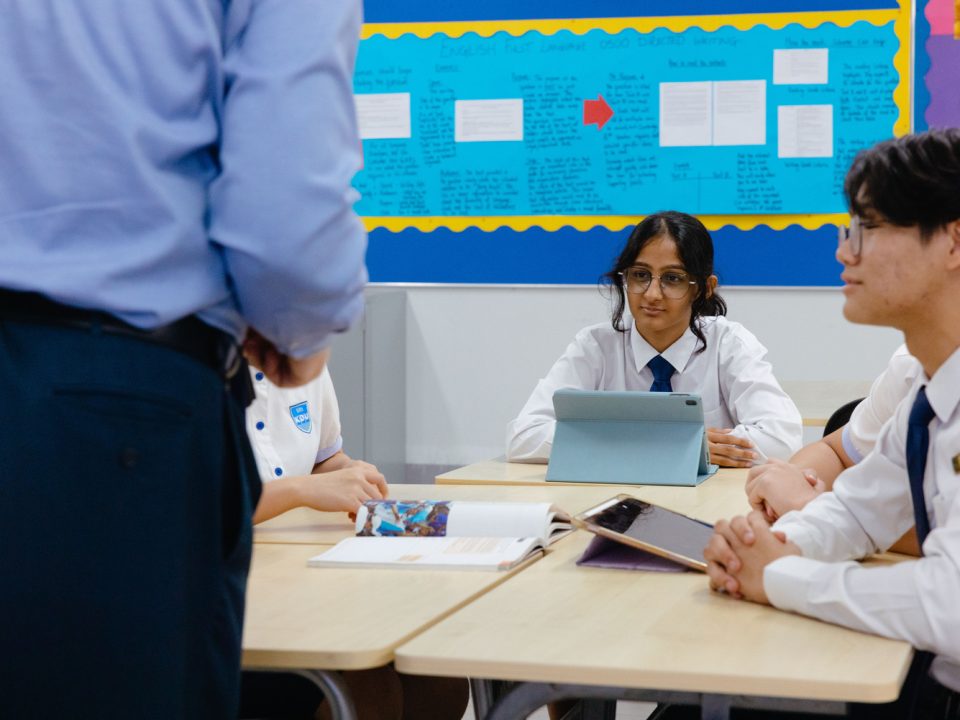
Preschool education in Malaysia caters to children aged 4 to 6 years. It is not mandatory but widely attended, laying the groundwork for foundational skills in literacy, numeracy, and socialization through play-based learning.
2. Primary Education
Compulsory education begins at the primary level, which spans six years for children aged 7 to 12. The primary curriculum focuses on core subjects such as Malay, English, mathematics, science, and moral education, culminating in the Ujian Pencapaian Sekolah Rendah (UPSR) examination at the end of Year 6.
3. Secondary Education
After primary school, students enter secondary education, which lasts for five years (Form 1 to Form 5). This stage is divided into two levels: the lower secondary (Forms 1 to 3) and upper secondary (Forms 4 and 5). At the end of Form 5, students take the Sijil Pelajaran Malaysia (SPM) examination, a critical assessment for further education and career pathways.
4. Post-Secondary Education
Following secondary school, students have various options, including Form 6 (pre-university education), vocational training, or enrolling in colleges. Those who complete Form 6 can take the Sijil Tinggi Persekolahan Malaysia (STPM) exam, which is recognized for university admissions.
5. Higher Education
Malaysia is home to numerous universities and colleges, offering a wide range of programs, from diplomas to degrees and postgraduate studies. The higher education sector is robust, with institutions that provide both local and international qualifications, including partnerships with foreign universities.
Malaysia’s Cambridge Assessment International Education (CAIE) 2urriculum
1. Early Years
The Early Years stage in the Cambridge curriculum is designed for children aged 3 to 5 years. It focuses on holistic development through play-based learning, fostering creativity, social skills, and early literacy and numeracy. The curriculum emphasizes active learning and exploration.
2. Primary Education
Cambridge Primary Education caters to children aged 5 to 11 years, providing a broad and balanced curriculum that includes subjects such as English, mathematics, science, and global perspectives. The curriculum is designed to nurture critical thinking and problem-solving skills while fostering a love for learning.
3. Lower Secondary Education
The Cambridge Lower Secondary curriculum is aimed at students aged 11 to 14 years. It builds on the foundations established in primary education, offering a flexible curriculum that includes subjects such as English, mathematics, science, and humanities. This stage emphasizes developing skills for independent learning, and effective communication.
4. Upper Secondary Education
The Cambridge Upper Secondary curriculum is for students aged 14 to 16 years, culminating in the Cambridge IGCSE (International General Certificate of Secondary Education) examinations. This stage offers a wide range of subjects, allowing students to choose pathways that align with their interests and career aspirations.
Verdict
In summary, understanding these various education levels in Malaysia allows parents and students to choose the best-fit pathway for learning style, academic goals, and future aspirations.
As a leading institution, Sri KDU offers a seamless, high-quality educational journey from early years to secondary education. Browse Sri KDU’s curriculum to learn how their programs offer diverse learning across the various education levels in Malaysia.
MBA – The University of Texas, Austin – Business Administration
Jiro Takahashi is the Group Chief Financial Officer at XCL Education, having joined in April 2024. He oversees the Group’s financial strategy, including the development of financial and tax strategies, directing strategic business plans, and enhancing financial and management reporting systems. He is also responsible for maintaining key relationships and leading the finance team to support business growth and operational excellence across all markets.
Jiro brings substantial financial leadership experience across the Asia Pacic region, specializing in corporate finance. Before joining XCL Education, he was the Chief Financial Officer for OCS Group UK, a global facility services provider, where he led the finance function across Asia Pacic, initiating strategies that significantly enhanced the region’s profitability and strategic positioning. Prior to this, he served as the Chief Financial Officer for Thailand and corporate development for Asia Pacic at Laureate International Universities, overseeing the company’s financial strategy and contributing to the financial success of Laureate and its institutions. Earlier in his career, Jiro held multiple finance roles of increasing responsibilities with Yum Brands in the US and Asia Pacic.
With over 20 years of experience in financial management, Jiro holds a Master’s degree in Business Administration (MBA) from The University of Texas at Austin. He has a proven track record of leading financial transformations, implementing robust financial controls, and aligning financial practices with organizational goals.
GOVERNOR
Gilles Mahe
QUALIFICATION
Post-graduate degrees in Business & Finance – University of Paris-La Sorbonne
Post-graduate degrees in Philosophy – University of Paris-La Sorbonne
Gilles Mahe is the Group CEO of XCL Education. Gilles has worked in leadership roles across a multitude of sectors in Asia since 2000 and has spent ~20 years leading organizations and managing operations in Asia Pacific. He brings with him deep experience managing large service-oriented organizations, where he had the privilege of building diverse teams, working with passionate people, and nurturing a culture of collaboration and excellence.
Gilles has ~7 years of extensive experience working in the education sector. Gilles was the Thailand & Myanmar CEO of Laureate International Universities, the world’s leading higher education provider, where he built and expanded Laureate’s activities in Southeast Asia. As the CEO, Gilles was instrumental in expanding Laureate’s presence in new geographies, launching innovative offline and online programs, turning around universities, scaling existing universities, and expanding the reputation and credibility of the overall group in Southeast Asia. As a father of three, he is a firm believer in the transformative power of education and the significant roles that schools play in shaping the lives of students and preparing them for what comes next.
Prior to XCL Education, Gilles was the Asia Pacific CEO for OCS Group, the world’s largest family-owned facilities management services company. At OCS, he played a pivotal role in building out the leadership team, executing the commercial transformation of the business, and acquiring & integrating other facilities management businesses. He has also served as the Managing Director for Asia and Vice President for APAC of Sodexo Group, a Fortune Global 500 company that is the leading provider of Food and Facilities Management services.
Gilles holds dual Post-graduate degrees in Business & Finance and Philosophy from the University of Paris-La Sorbonne in France.
GOVERNOR
Marcel Van Miert
QUALIFICATION
Bachelor’s in Arts – Regent’s University London
MBA – Henley Business School UK
Marcel Van Miert is a Senior Advisor to TPG in Southeast Asia. Marcel has almost 3 decades of extensive experience working exclusively in the education sector.
Prior to TPG, Marcel served as the Executive Chairman of Vietnam Australia International School (VAS) for ~8 years. Prior to VAS, Marcel spent 4 years as the Group CEO of WCL Group, a PE-backed school chain now part of Nord Anglia, and 3 years as the Managing Director of the Schools Division at Nord Anglia.
Marcel has also served several other education companies in multiple capacities including Sommet Education (a network of hospitality schools), VUS (English Language Training Centers), EBS London (UK’s first private accredited Business School), INK Education, Sri KDU Schools, and Europreneur Consultants.
Marcel received a Bachelor’s in Arts from Regent’s University London and MBA from Henley Business School in the UK.
GOVERNOR
Anthony Partington
QUALIFICATION
BA Hons – University of Oxford – English Language and Literature
PGCE – University of Cambridge – Secondary English and Drama
NPQH – Institute of Education, London – National Professional Qualification for Headship
MA – University of Oxford
MA – Institute of Education, London – Media, Culture and Communication
Anthony is the Chief Executive Officer of XCL Education Malaysia. He completed his Bachelor of Arts (Honours) at Christ Church, University of Oxford. After leaving Oxford, Anthony worked in the City of London in public, media and analyst relations. A passion for English Literature and life-long learning led him to being asked to work first as a teacher as part of the reforms at a school in Bolton and then to Trinity College, University of Cambridge to train as an English teacher in 2002.
He has worked at a number of schools in Cambridgeshire, England, including pastoral leadership and leading the internationally renowned English and media faculty across the Parkside Federation of academies in Cambridge. Anthony joined the Cambridge Meridian Academies Trust (CMAT) in 2010 to support the improvement of Nene Park Academy, where he worked as Assistant Principal leading on the development of the sixth form, literacy, English as an additional language, special needs and latterly as the Vice Principal with responsibility for the curriculum, timetable and student achievement throughout the academy. In July 2014, Anthony was appointed as Principal of Stamford Welland Academy with the brief to deliver the ‘Stamford Free School’ vision. During his time here, the school secured its best examination results and Ofsted inspection judgment in its history. In September 2017, he became CMAT’s Executive Director of Education responsible for the quality assurance of all the academies and teacher professional development from initial teacher training to leadership succession planning and development.
In February 2019, Anthony joined GEMS as the Principal of GEMS International School Tropicana Metropark, Kuala Lumpur, Malaysia. Whilst completing a Masters with UCL Institute of Education, Anthony conducted research into and published on the teaching of literacy. He is a frequent conference speaker, presenting on school leadership and English teaching and editor of ‘Much Ado About Nothing’ and ‘Twelfth Night’ in the Cambridge University Press Cambridge School Shakespeare series. Anthony believes in a whole education striving for academic excellence and great examination results, whist providing the experiences and building the character skills that student need to thrive in learning, work and life. In his spare time, Anthony enjoys travel, film, theatre, music, singing, running, and exercise.
Germaine Thai,
Strategy & Operations Manager at Grab Malaysia
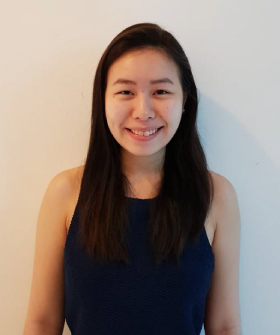
Growing up in Sri KDU Secondary School has given me a multitude of skills and plenty of opportunities. Having spent years in an institution that has always pushed for holistic education, focusing on supplementing academics with co-curricular activities has pushed students like me to step out of their comfort zone to really deep dive into our own individual strengths and weaknesses. The many activities and events held in school like Paramount Championships or Performance & Awards Nights have truly supported me to build confidence and step outside of my comfort zone. I am also grateful that beyond the SPM syllabus I had in 2009, I also get to widen my horizons with compulsory classes for Mandarin and ICT which have proven useful today in my career. I believe this has greatly impacted my way of working now, especially in my industry and line of work.
Chong Hong Li
National Foil Fencer National Foil Fencer
Everyone needs a sport, and it’s important to balance academics with extracurricular activity. Physical activities help fill your time, as well as express yourself while having fun. I picked fencing as an after school activity because it’s both physically and mentally challenging. Secondary school is a time to get out there and explore as many opportunities, and even to take up some leadership roles, for exposure and self-development. Joining more competitions is a great way to grow, and you can do that while still in school, because your teachers and friends will help you.
Wan Arif Iskandar
Artist with Universal Music Malaysia
I’ve been performing since I was young, being involved in the arts from primary school. There were so many events to take part in, like band competitions, chess, critical thinking, acting and more in school. And it paved the way for me, as well as my fellow Insomniacks band mate Gavin (a fellow Sri KDU alumnus who is now on hiatus from Insomniacks) to stand among leading performers in our field. I remember being part of the talent competition committee, where I had a chance to lead and help organise the event; which allowed me to develop skills plus leadership qualities. But most of all, it’s the people that I cherish the most, from friends to educators like Mr Zack, our musical director at the time—who have all impacted me in many ways.
Morgan Nathan,
Product Strategy Associate at LinkedIn
The whole approach of supplementing and incorporating performing arts in the syllabus has introduced a more holistic approach to education and I was glad to be given that experience growing up in Sri KDU Schools. Back then, we had events such as annual musicals and stage performances, and I was also involved in many sports activities, all of which have truly helped me build confidence and helped shape me into being the person I am today – resilient, disciplined, confident. When I took on the role as Student Council President, I learned a lot from my peers and lecturers – I organised multiple events, and spearheaded an anonymous feedback system for students, among the many contributions.Remember that, all it takes for one to strive or move forward in life is to step out of your comfort zone.
Zheng Xi Yong,
Professional actor
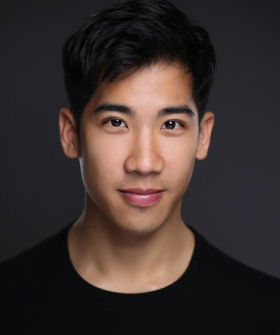
I have always felt that passion is one of the most important drivers, especially in young people, and Sri KDU was great in promoting mine, especially in performing arts — they have always practiced a culture of supporting and nurturing the performing arts. The breadth of activities and competitions, in addition to the way talent is supported and celebrated by the school and its student body provided me the opportunity and confidence to develop my craft, and importantly, have an amazing time while doing it. There are few careers that involve consistently applying/auditioning for jobs and getting rejected. Truly, the hustle never stops. What’s important is being brave and creating your own path.
Nicholas Ou,
CO-FOUNDER AND CEO OF LOOP FOODS
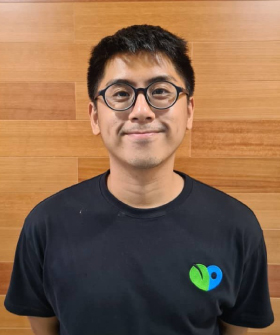
I have always dreamed of being an entrepreneur and my experience in Sri KDU has taught me to dream bigger. Growing up, my biggest personal challenge was punctuality and discipline, and I took a lot of matters lightly. But school allowed me to reflect and improve and that assisted me a lot with my first entrepreneurial venture. I always believed in the holistic education and safe space that Sri KDU had provided my peers and me, along with the opportunity to try new things. There are so many things that a student can do to push themselves or create new opportunities for their future, and I was blessed with teachers like Mr. Asokan and Mr. Saravanan who have both helped me a lot on a personal level by teaching and providing advice that continued to push me to do better.
Dato Kamal Khalid, Parent of Maryam Kamal
Sekolah Sri KDU emphasises on producing students that are multifaceted. It’s not just an academic school but it allows students to develop different parts of their personality and skills sets that make them a more well-rounded individual.
Sri KDU allows students to discover themselves. Because of the number of opportunities Sri KDU gives students, it encourages students to try different skill sets. We are very happy Maryam has been given these opportunities and has become a more complete person. Sekolah Sri Sri KDU has opened a lot of doors for her.
GOVERNOR
Brian Geoffrey Rogove
QUALIFICATION
BS – Northern Illinois University – Economics
MBA – University of Chicago Booth School of Business – Finance
Experienced CEO with a demonstrated track record of creating shareholder value in the education management industry. Strong business development professional skilled in Business Planning, Entrepreneurship, Venture Capital, Management, Mergers & Acquisitions.
GOVERNOR
Wan Hafiz Hamzah bin Wan Hussien
QUALIFICATION
BSc Hons – University of Warwick – Economics
En. Wan Hafiz Hamzah Bin Wan Hussien is a Senior Advisor to TPG Capital. He started his career with CIMB Investment Bank in 2004 where he experienced roles in the Group CEO’s Office, Investment Banking and a stint in Indonesia with CIMB Niaga. He subsequently joined Khazanah Nasional’s strategy team in 2016 where he worked on projects involving Khazanah’s investment portfolio and overall corporate strategy.
En. Wan Hafiz Hamzah holds a degree in Economics from the University of Warwick.
GOVERNOR
Datuk Ganendran Sarvananthan
QUALIFICATION
LLB – University College London
Datuk Ganendran Sarvananthan, is a Managing Partner at TPG Capital Asia and its Head of South East Asia. A distinguished scholar, he was an ASEAN Scholar, a Sultan Azlan Shah Scholar; and a recipient of the British Chevening Scholarship.
A law graduate of University College London (UCL), he was the Head of Investments at Khazanah Nasional for a decade before he joined TPG in 2014. More importantly, Datuk Ganen has played a key role in TPG Capital Asia’s investment in Vietnam Australian International School (VAS) which is one of the fastest growing school groups in Vietnam.
GOVERNOR
Dominic John Picone
QUALIFICATION
BH-COM – University of Melbourne – Finance
LLB – University of Melbourne
Mr Dominic John Picone is a Partner and Managing Director at TPG, based in Singapore. He has lived and worked in Asia since joining the firm in 2005 and, in that time, has been engaged with investments throughout the Asia Pacific region that represent more than $1.5b of committed equity capital.
His involvement with current and past TPG portfolio companies includes Apollo Towers, Vietnam Australia International School (VAS), Myanmar Distillery Company / Grand Royal Group, PropertyGuru, 8990 (Deca Homes), BFI Finance, Masan Group, Fairmont Raffles Hotels, Bank BTPN, United Test & Assembly Center (UTAC), and CIMB.
Prior to TPG, Mr Picone worked in the Investment Banking Division of Credit Suisse First Boston in Melbourne, primarily focused on mergers and acquisitions in Australia and New Zealand.
CHAIRMAN
Y.A.M. Tunku Ali Redhauddin Ibni Tuanku Muhriz
QUALIFICATION
BA Hons – University of Cambridge – History and Social & Political Sciences
MPA – John F Kennedy School of Government, Harvard University – Public Administration
EMBA – Tsinghua University
Tunku Ali Redhauddin Ibni Tuanku Muhriz, a graduate of both the University of Cambridge and Harvard University, is Chairman of Marlborough College, Malaysia; founding trustee and Chairman of Teach for Malaysia; and Pro-Chancellor at Universiti Sains Islam Malaysia.
In 2013, he was recognised as a Young Global Leader by the World Economic Forum. Previously, he worked at both McKinsey & Company and Khazanah Nasional Berhad, and he currently holds other board and advisory roles at several corporations and non-profit entities including TPG Capital Asia.
Wong Ei Mee, Parent of Spring Saw Ker Li & Summer Saw Ker Hui
I chose Sekolah Sri KDU for its peaceful environment, secure campus and all-around education that is top-notch. Later, I discovered that there was so much more the school offers. Every day my child looks forward to going to school because she finds the activities and classes to be so fascinating, exciting and enriching. Every day, she goes through a variety of experiences, where she is surrounded by a welcoming leadership team, thoughtful teachers and fun-loving supportive peers.
In addition to the strong academic provision, I commend the school for providing her the pathway to participate in well-organized and well-established extracurricular activities that have given her the opportunity to grow individually and improve her leadership skills. She has participated in numerous stage productions and performing arts, where she has had a platform to shine. Her ability to learn and develop her enthusiasm and talents has given me the impression that this school’s greatest asset is her.
I want to express my sincere gratitude to Sri KDU Primary School’s excellent administration, teachers and staff for their dedication. Both my daughters, Summer Saw who started her Primary 1 journey with the school in 2013, and Spring Saw who followed suit in 2020 have grown so much throughout their time with the school. I have no doubt that the school could nurture and mentor another child to become a successful adult, so I wouldn’t think twice about sending another one to the school!
Mr. Lim, Father of Cindy Lim
We are glad that we have made a right decision to send Cindy to Sri KDU Klang. Since joining, I can see my daughter’s improvement in all aspects, in term of studies and/or extra-curricular activities. A big thank you to the principal, teachers, and administrative staff in Sri KDU Klang as they have been very supportive and considerate. Besides, the environment and facilities are fantastic here where students enjoy going to school every day.
Mr. Terrance Tay, Father of Joshua Tay
I could see a lot of planning and effort had been put into the construction of the school. The respresentatives I had met, together with Ms April were very helpful and there was a genuine sense of dedication to the profession of teaching.
May Yap, Parent of Ethan Chua
My son loves Sri KDU International School Subang Jaya.
He enjoys good quality teachers who build his self-confidence and motivation.
He is immersed in daily exchange of best practices with his fellow classmates. His learning is not confined to the classroom as lessons include physical education where various types of sports are available.
Above all, his friends and classmates here are able to collaborate positively to bring out the best in one another.
We cannot possibly itemise every single reason he loves it here but this school is now his second home – and that is saying a lot!”
Michii Teo, Parent of Hazel Wong
We visited numerous international schools in Klang-Valley and Sri KDU Subang Jaya was not even on our list. Reason being it is way out of our travelling radius. However, we are glad we made the visit to the school before our final call, and it was the best decision ever! It was a huge transition period for us during the first 2 weeks into school, but the school’s team (Teachers, Administrative and Parent’s Teacher Association) made us feel right at home. We were given clear guidance and was kept well informed on the happenings in the school. My daughter blended into the community quite well with the care provided by the Homeroom teacher. All the teachers here are the kindest, as she told me. She looks forward to going to school and has become more disciplined in terms on knowing what tasks she needs to complete daily. She has gained so much confidence during this short period of time and was given the encouragement to explore and develop her abilities here. She was just selected as the new Primary House Captain for Year 6 AY2022/2023.
Every parent want to find the ‘perfect’ school for their child and are afraid of making the wrong decision. For us, as long she is safe and happy, we believe, she will eventually find the way to her own success.
Hannah Ho, Parent of Sofia and Sulaiman
We were hunting for a British international school in Malaysia that embraces neuro-diversity for “third culture family” and Sri KDU International School Subang Jaya was our best fit.
We are blessed to have 2 happy and active children enrolled here since 2019. They are confident learners with growth mindsets, self-assured and given ample academic and co-curricular opportunities to build their life-skills and practice leadership skills while forming their personalities in a safe environment.
The continuous support from Senior Leadership Team members, teachers, specialist teachers, teaching assistants, counsellors and support staff are contributing success factors to our “home-child-school” partnership.
We continue to look forward to various best possible positive outcomes for our 2 “precious not-so-little ones” in the next few years.
















Growing up in Sri KDU Secondary School has given me a multitude of skills and plenty of opportunities. Having spent years in an institution that has always pushed for holistic education, focusing on supplementing academics with co-curricular activities has pushed students like me to step out of their comfort zone to really deep dive into our own individual strengths and weaknesses. The many activities and events held in school like Paramount Championships or Performance & Awards Nights have truly supported me to build confidence and step outside of my comfort zone. I am also grateful that beyond the SPM syllabus I had in 2009, I also get to widen my horizons with compulsory classes for Mandarin and ICT which have proven useful today in my career. I believe this has greatly impacted my way of working now, especially in my industry and line of work.